
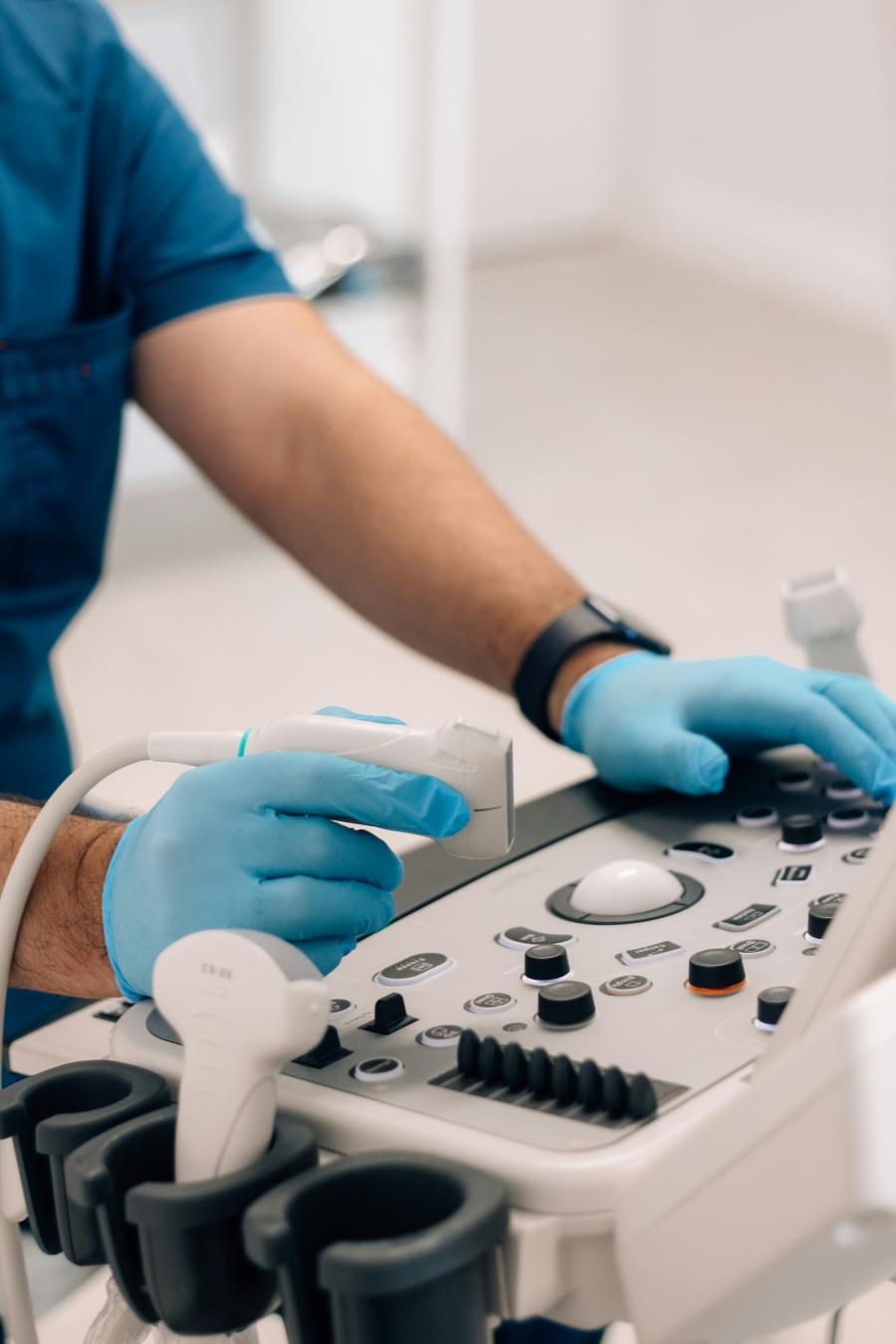
For healthcare professionals who enjoy combining clinical expertise, technology and patient care, a career in Sonography can offer a rewarding and varied path.
Ultrasound plays an important role in modern healthcare, supporting the diagnosis, monitoring, and management of a wide range of conditions. From pregnancy scans and abdominal examinations to vascular and musculoskeletal imaging, ultrasound provides clinicians with valuable real-time information without the use of ionising radiation.
Behind every scan is a highly skilled professional who combines technical ability with clinical judgement and patient care: the Sonographer.
What does a Sonographer do?
Sonographers use ultrasound equipment to produce real-time images of structures within the body. These images can help clinicians investigate symptoms, identify abnormalities, support diagnosis, and monitor a patient's condition.
The exact responsibilities of a Sonographer depend on their area of expertise, but the role can include:
Sonography is therefore about much more than operating an ultrasound machine. It combines anatomy, physiology, pathology, technology and clinical reasoning with a strong focus on patient-centred care.
The Society and College of Radiographers and British Medical Ultrasound Society's current guidance emphasises safe, effective and person-centred ultrasound practice, alongside appropriate education, governance and ongoing professional development. (SoR)
A career centred around patient care
One of the most rewarding aspects of Sonography is the level of patient interaction.
Sonographers often spend significant time directly with patients, explaining examinations, answering questions and providing reassurance. Patients may be attending because of routine screening, pregnancy, ongoing monitoring or concerns about their health.
Communication skills are particularly important. A Sonographer needs to explain procedures clearly while remaining sensitive to a patient's circumstances and emotions.
This is especially relevant in areas such as obstetric ultrasound, where patients may experience a mixture of excitement and anxiety. In other clinical settings, a patient may be undergoing an examination because of unexplained symptoms or concerns about a possible diagnosis.
The ability to combine compassion with clinical objectivity is therefore an important part of the profession.
Areas of Sonography
One of the attractions of a career in Sonography is the variety of specialist areas available.
Obstetric Sonography
Obstetric Sonographers perform ultrasound examinations during pregnancy, assessing fetal development and maternal anatomy at different stages.
The role requires technical expertise, attention to detail and excellent communication skills. Sonographers may identify findings that require further assessment and work closely with midwives, obstetricians, and other healthcare professionals.
General and non-obstetric ultrasound
General ultrasound covers a broad range of examinations, which can include abdominal, pelvic and small-parts imaging.
Sonographers may assess organs and structures including the liver, gallbladder, kidneys, thyroid and reproductive organs, depending on their scope of practice and clinical setting.
Vascular Sonography
Vascular ultrasound assesses blood vessels and blood flow and can help identify conditions such as narrowing, blockages or other vascular abnormalities.
This area requires a strong understanding of anatomy and physiology, together with the technical skills needed to perform Doppler examinations.
Paediatric Sonography
Paediatric ultrasound involves examining infants, children and young people and requires specialist knowledge alongside excellent communication skills.
Sonographers need to adapt their approach to the age and needs of the child while maintaining the required clinical and professional standards.
Musculoskeletal and other specialist areas
Ultrasound is also used in the assessment of muscles, tendons, joints and other soft tissues. As technology and clinical applications continue to develop, there are opportunities for Sonographers to build expertise in increasingly specialised areas.
How do you become a Sonographer?
There is no single route into Sonography in the UK.
Traditionally, many Sonographers have entered the profession after qualifying in another healthcare profession, such as diagnostic radiography, nursing or midwifery, before undertaking further ultrasound education and clinical training.
However, direct-entry routes are now also available. CASE, the Consortium for the Accreditation of Sonographic Education, accredits ultrasound education programmes across the UK and Ireland. Its current directory includes postgraduate programmes as well as newer direct-entry routes. (CASE)
CASE accreditation applies to education programmes rather than individual Sonographers. Its standards are designed to support high-quality education and the development of safe and competent ultrasound practitioners. (CASE)
Training combines academic study with clinical experience. This is particularly important in Sonography because developing competence involves applying theoretical knowledge in real clinical environments, under appropriate supervision.
For anyone considering entering the profession, researching the available education routes and choosing an appropriately recognised programme is an important first step.
What skills does a Sonographer need?
Sonography is technically demanding, and successful practitioners typically combine a range of clinical, technical and interpersonal skills.
Technical ability
Sonographers need excellent hand-eye coordination and the ability to manipulate equipment accurately to obtain diagnostic images.
Clinical judgement
Producing an image is only part of the process. Sonographers need to understand anatomy and pathology, recognise abnormalities and identify when further investigation or escalation may be required.
Communication
Patients need clear explanations and reassurance throughout an examination. Good communication helps create a positive patient experience while ensuring the examination is conducted safely and professionally.
Attention to detail
Small differences in anatomy or pathology can be clinically significant, making accuracy and a methodical approach essential.
Compassion and resilience
Healthcare professionals may encounter patients who are anxious, distressed or experiencing pain. Sonographers need to remain calm, professional and empathetic in challenging situations.
Commitment to learning
Ultrasound continues to evolve, with developments in technology, clinical practice and professional guidance. Continuing professional development is therefore an important part of a Sonographer's career.
Career progression in Sonography
A career in Sonography does not have to follow one fixed path.
As practitioners gain experience, they may develop specialist expertise in areas such as obstetrics, vascular, paediatrics or musculoskeletal ultrasound.
Experienced Sonographers may also progress into senior clinical, advanced practice, education, leadership or management roles. Opportunities can include supporting students and trainees, becoming involved in clinical education, contributing to service development or taking on wider clinical responsibilities.
For those who enjoy teaching and developing others, education can provide another avenue for career progression. Others may prefer to remain clinically focused while developing advanced expertise within a particular area.
The current SoR/BMUS professional guidance also recognises the importance of professional progression and keeping practice up to date as ultrasound continues to evolve. (SoR)
The importance of CPD
Continuing professional development is an important part of maintaining and developing a Sonography career.
CPD can include formal qualifications and courses, conferences, workshops, clinical supervision, reflective practice, research, teaching and keeping up to date with professional guidance.
For Sonographers who enjoy learning, this ongoing development can be one of the most rewarding aspects of the profession. It provides opportunities to expand clinical skills, develop specialist interests and progress professionally.
The latest SoR and BMUS Guidelines for Professional Ultrasound Practice were updated in January 2026 and provide current guidance across areas including governance and safety, education and accreditation, ultrasound examinations and additional procedures. (SoR)
Is Sonography the right career for you?
Sonography can be an excellent career choice for people who enjoy combining science, technology and patient care.
It offers the opportunity to develop specialist clinical expertise while working with a wide variety of patients and conditions. There are also opportunities to specialise, progress into senior roles, become involved in education or move into leadership and service development.
It is, however, a career that requires commitment. Training involves both academic and clinical development, while qualified practitioners need to maintain their competence and continue learning throughout their careers.
For those who enjoy clinical problem-solving, working with people and developing specialist expertise, Sonography can provide a rewarding and varied healthcare career.
Taking the next step in your Sonography career
Whether you're newly qualified, developing a specialist interest or an experienced Sonographer considering your next move, understanding the opportunities available is an important part of career planning.
At Stroud Resourcing, we work with healthcare professionals and organisations across the UK, supporting candidates with their career progression and connecting experienced professionals with opportunities that match their skills, experience and aspirations.
If you're considering your next Sonography opportunity, we'd be happy to have a confidential conversation about where your experience could take you next.
Find out how Stroud Resourcing can support your career progression or call us on 01904 239910.
BackStroud Resourcing
Wizu | East Coast House,
25 Skeldergate, York, YO1 6DH
+44 (0)1904 239910
careers@stroudresourcing.co.uk

© 2026 by Stroud Resourcing. All Rights Reserved. Privacy Cookies BD & Professional Contacts Privacy Notice



